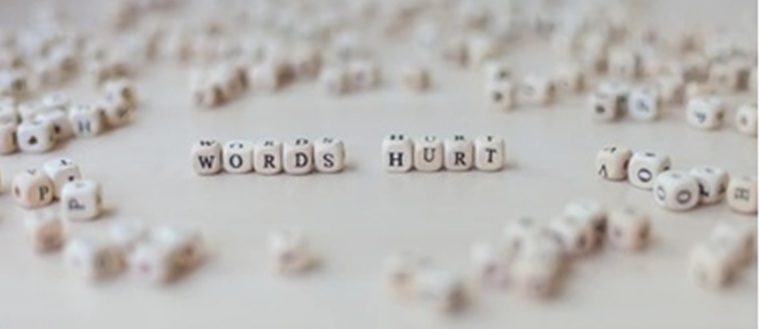
Sticks and stones may break my bones, but words will never hurt me. That’s what I was told growing up. Teachers said it, parents said it, everyone basically. At least, everyone that I would listen to. So I believed it. I believed that sticks and stones may break my bones, but words would never hurt me. And for the most part, growing up, this worked. I definitely tripped over some sticks, and I probably fell on some rocks, too. And to be honest, I can’t really remember any mean words that other kids said to me at that young age. No, words didn’t hurt me until I got older. The kids around me got crueler and more creative, and they developed new opinions. And, listen, I understand having your own opinions on things. Like, for me, I love classic literature, and I can’t stand it when clothing companies destroy their products instead of donating them or selling them for a discount. But I have to say, it really does concern me when people focus their opinions on pure hatred or ignorance. For this reason, in particular, I want to address the damaging impact that identity-based words as insults can have on everyone and why we must put an end to this harmful language. Not the sticks, or the stones, but the words that hurt me.
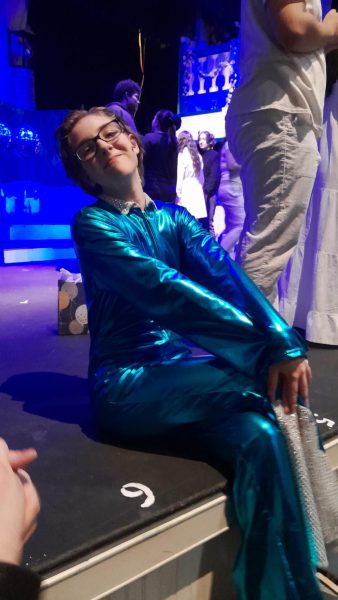
So, surprise, surprise, I got bullied in middle school. I bet you can tell that just by looking at me. But it wasn’t just me. It was most of my other friends, too. Of course, I didn’t have that many friends back then, and the ones I did have all had something in common. We were all queer in some way. We all got bullied, so we tended to stick together. And, I know, this is already an uncomfortable topic for some, but I feel that a serious issue, such as this, cannot properly be addressed without an uncomfortable conversation. Starting in about sixth grade, I can recall hearing the word “gay” being used as a way to insult people or things. It meant weird, or bad, or just overall wrong. But hearing “OMG, that’s so gay” anytime someone in my class did something embarrassing or strange kind of put a sense of fear in me. When words are used as synonyms like this, it gets internalized, even if they say, “Oh, I didn’t mean it like that” or “Calm down, it was just a joke.” So for a while, I thought I was bad and weird and kind of a freak. As a matter of fact, when I really looked into it, I found that a Michigan University actually did a study on this. They asked over a hundred of their queer students how often they heard the phrase “That’s so gay” or similar things. In the end, they found that only about thirteen percent of the students had not heard this kind of language at all. For those that did hear this being said frequently, they made the statement that “Hearing the phrase more often was found to increase students’ risk for feeling isolated at the university and for health problems… hearing such messages about one’s self can cause stress, which can manifest in headaches and other health concerns,’” (Arbor, 9-12). And for me, I did find this to be true. Middle school was the worst years of my life, largely due to the bullying. And while I don’t frequently get made fun of to my face anymore, I still feel hurt anytime I hear someone say that something is gay as to mean undesirable. Using those words affects a lot of people, not just the ones you’re saying them to.
Similarly, I wanted to talk about using the word “autistic” or the r-word to mean stupid, dumb, or weird. We all know that this isn’t what these words really mean. The R-word is an outdated medical term to mean one with an intellectual disability, and autism is a genetic mental disability that affects a person’s social skills, communication, physical senses, and overall way of thinking and living. In no way do they mean dumb at all. Interestingly enough, symptoms commonly associated with autism are having a very high IQ, specialized interests, and a strong sense of justice. Now, of course, just like anyone else, autistic people are not all the same. For some, these traits may not seem to be present at all. Luckily for me, I feel that they are. I was born with autism that was given to me genetically by my dad, and, to me, I feel that these traits are something that make me truly incredible. I’m not embarrassed to say that I’m autistic because I know what it really means, but I must say, when I hear students telling each other that they’re autistic or R-worded for making foolish errors in schoolwork or for doing something wacky and disruptive in front of their peers, it really does upset me. Someone who agrees with me is Jackie Dilworth, the director of communications at The Arc, an organization set up to spread awareness about and resources to people with disabilities. In her article, “The R Word: Why Language Matters and How We Can Do Better,” she wrote, “When we casually use terms like the R-word, we’re not just being insensitive—we’re actively contributing to a culture that excludes and discriminates against people with intellectual disabilities…
The R-word is a constant reminder of the discrimination and challenges people with disabilities face every day. From employment discrimination to healthcare disparities,” (Dilworth 8-9). Dilworth describes perfectly how dehumanizing it feels to hear the R-word on the daily, and what the serious effects of using it could be.
For all of these reasons, I find it completely unacceptable that there are still people who are using the words gay or autistic or even the R-word as casual insults to belittle things or people. They are not just words; they are identities. These terms are what make people who they are, and they’re what create our beautifully diverse society. By using them to mean horrible things, we are saying that these things should be hidden, and not showing who you are is no way to go through life. In order to fix this, I think that teachers should continue to teach students about kindness and inclusivity through high school. As I said earlier, when I was not hearing this daily, we were all in elementary school. If you don’t remember, elementary school was really the last time that our teachers would give entire days to tell us to be kind and love one another, and although we may not have realized it then, I do think that this had a very serious impact on all of us and the way we treated others. I encourage you all to take this seemingly minor issue seriously and make the choice to stop using these words as insults to ensure the comfort, happiness, and safety of all people. Choose to be kind, because sticks and stones may break my bones, but words have absolutely hurt me.
Works cited
The Arc. “The R-Word: Why Language Matters and How We Can Do Better.” October 2024, https://thearc.org/blog/the-r-word-why-language-matters-and-how-we-can-do-better/.
Arbor, Ann. “Sticks and stones: ‘”That’s so gay” negatively affects gay students.” August 2012, https://news.umich.edu/sticks-and-stones-that-s-so-gay-negatively-affects-gay-students/.